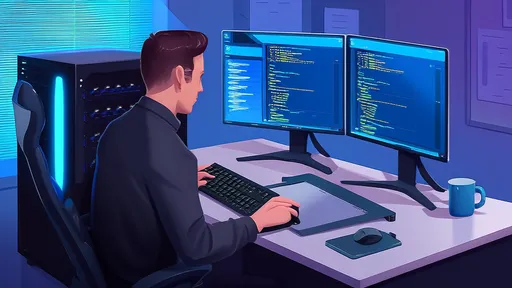
The glow of monitors illuminates tired eyes as fingers dance across keyboards long past midnight. This romanticized image of the dedicated programmer has become a dangerous stereotype in the tech industry, masking a growing health epidemic among software developers. Behind every sleek app and revolutionary platform lies a workforce grappling with physical and mental health challenges that the industry has systematically overlooked.
Sedentary work cultures combined with intense cognitive demands create a perfect storm for chronic health issues. Many developers report severe back pain by their mid-30s, with some requiring surgery before they turn 40. The problem extends far beyond ergonomic chairs and standing desks - it's about fundamental flaws in how we structure technical work. Continuous hours in static positions lead to musculoskeletal degeneration, while the constant screen exposure contributes to digital eye strain at rates far above other professions.
The mental health statistics paint an even darker picture. Depression and anxiety rates among developers are nearly double those of the general population, according to recent studies. The pressure to constantly learn new technologies, combined with unrealistic deadlines and the isolation of remote work, creates psychological stressors that few are equipped to handle. Imposter syndrome runs rampant, with many talented engineers secretly believing they'll be exposed as frauds despite years of successful work.
Sleep deprivation has become a twisted badge of honor in developer culture. All-night coding sessions are glorified, while the science clearly shows that cognitive performance degrades sharply after 16 hours awake. The myth of the "night owl coder" persists despite overwhelming evidence that consistent sleep patterns dramatically improve code quality and problem-solving abilities. Companies celebrate marathon hackathons that would be considered safety violations in other industries.
Nutritional neglect is another silent killer. The convenience of energy drinks and fast food combined with irregular meal patterns leads to metabolic disorders. Many developers report going entire workdays without proper meals, relying on caffeine and sugar to power through. This not only impacts immediate cognitive function but leads to long-term health consequences including diabetes and cardiovascular disease.
The human cost of ignoring developer health is becoming impossible to ignore. Burnout causes many talented engineers to leave the field entirely in their prime working years. The industry loses decades of accumulated expertise because we failed to address preventable health issues. Some companies are beginning to recognize this as the business crisis it truly is - health-related attrition costs the tech sector billions annually in recruitment and lost productivity.
Forward-thinking organizations are implementing comprehensive health initiatives with remarkable results. These go far beyond superficial perks like office snacks. They include mandatory movement breaks, protected sleep time during crunch periods, mental health days separate from vacation time, and nutrition education tailored to developer lifestyles. The most progressive companies are redesigning their entire workflow around sustainable productivity rather than heroic effort.
The solution requires cultural change at every level. Engineering managers must stop glorifying overwork. Investors need to value sustainable growth over breakneck speed. Developers themselves must overcome the stigma of admitting physical limits. This isn't about coddling workers - it's about recognizing that human brains and bodies have biological requirements that directly impact the quality of technical work.
As the demand for software continues growing exponentially, the industry faces a choice: continue burning through developers at unsustainable rates, or build a healthier culture that allows for long, productive careers. The health of our developers isn't just a personal issue - it's the foundation of our digital future. Companies that recognize this will reap the benefits of more creative, stable engineering teams. Those that don't will find themselves struggling with constant turnover and declining innovation.
The time for empty wellness platitudes has passed. Concrete action on developer health is no longer optional - it's an existential requirement for any tech organization that wants to thrive in the coming decades. The next revolution in software development won't come from a new framework or language, but from finally treating developers as whole human beings rather than code-producing machines.
By /Aug 15, 2025

By /Aug 15, 2025

By /Aug 15, 2025

By /Aug 15, 2025

By /Aug 15, 2025

By /Aug 15, 2025

By /Aug 15, 2025

By /Aug 15, 2025

By /Aug 15, 2025

By /Aug 15, 2025

By /Aug 15, 2025

By /Aug 15, 2025

By /Aug 15, 2025

By /Aug 15, 2025

By /Aug 15, 2025

By /Aug 15, 2025

By /Aug 15, 2025

By /Aug 15, 2025

By /Aug 15, 2025

By /Aug 15, 2025
