The scientific community has long been fascinated by the extraordinary thermal properties of liquid metals, particularly their ability to conduct heat with remarkable efficiency. Recent experimental studies focusing on the precise measurement of thermal conductivity in liquid metal alloys have yielded groundbreaking insights that could revolutionize thermal management systems across multiple industries. These findings challenge conventional assumptions while opening new possibilities for advanced cooling applications.
Understanding the fundamentals of liquid metal thermal conductivity requires a deep dive into the atomic-level behavior of these unique materials. Unlike traditional coolants or solid conductors, liquid metals exhibit a complex interplay between free electron movement and atomic vibrations. Researchers at the National Institute of Advanced Industrial Science and Technology recently completed a comprehensive study measuring the thermal conductivity of gallium-based alloys under various temperature conditions. Their sophisticated experimental setup eliminated decades-old measurement inaccuracies that had plagued previous studies in this field.
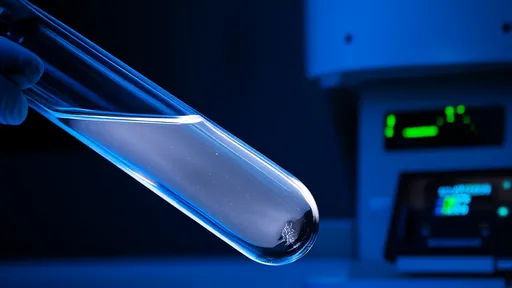
The experimental methodology employed state-of-the-art laser flash analysis combined with precision calorimetry. This dual approach allowed scientists to simultaneously measure thermal diffusivity and specific heat capacity, enabling more accurate calculation of thermal conductivity values than ever before. What makes these measurements particularly significant is their demonstration of how minor compositional changes in alloy formulation can dramatically alter thermal performance characteristics. The team discovered that certain eutectic mixtures displayed thermal conductivity improvements of up to 18% compared to pure gallium samples.
Practical implications of these findings are already becoming apparent in prototype thermal management systems. Aerospace engineers have begun testing liquid metal cooling loops that leverage the newly measured conductivity values to achieve unprecedented heat transfer rates in compact spaces. The experimental data has proven particularly valuable for designing next-generation thermal interfaces in high-power electronics, where traditional thermal pastes and pads reach their performance limits. Several microprocessor manufacturers are reportedly developing liquid metal-based cooling solutions for their upcoming chip architectures.
Beyond electronics cooling, the research has sparked interest in renewable energy applications. Concentrated solar power plants could benefit from liquid metal heat transfer fluids that operate at higher temperatures with greater efficiency than current molten salt systems. The experimental data provides crucial parameters for engineering such systems, including precise viscosity-thermal conductivity relationships that determine pumping requirements and heat exchanger designs. These developments may significantly reduce the levelized cost of thermal energy storage in renewable power generation.
The research team emphasized that their measurements revealed several unexpected phenomena in liquid metal thermal transport. Contrary to classical theory, they observed non-linear conductivity behavior at certain temperature thresholds in some alloys. This discovery suggests that existing models of liquid metal thermodynamics may require substantial revision. Follow-up studies are already underway to investigate these anomalies using advanced molecular dynamics simulations combined with neutron scattering techniques.
Challenges in commercial implementation remain significant despite the promising experimental results. The corrosive nature of many liquid metal alloys requires careful material selection for containment systems, while their high density poses engineering challenges in certain applications. Researchers are actively investigating protective coatings and alloy modifications to address these issues. Recent breakthroughs in nano-oxide surface treatments show particular promise for preventing corrosion while maintaining excellent thermal contact.
Standardization of measurement techniques has emerged as another critical area requiring attention. The research community currently lacks universally accepted protocols for liquid metal thermal property characterization, leading to occasional discrepancies between studies. An international working group has formed to establish best practices, with their preliminary recommendations expected to be published later this year. These standards will be essential for ensuring the reliability and reproducibility of future experimental data.
Looking ahead, the field appears poised for rapid advancement. Several research institutions have announced plans to investigate novel liquid metal compositions specifically optimized for thermal conductivity. Theoretical physicists are developing new computational models to predict the thermal properties of these materials before experimental synthesis. Meanwhile, materials scientists are exploring hybrid systems that combine liquid metals with high-conductivity carbon structures to create composite thermal materials with tailored properties.
The comprehensive thermal conductivity measurements have provided a solid foundation for these diverse research directions. As experimental techniques continue to improve and fundamental understanding deepens, liquid metals may soon transition from laboratory curiosities to essential components in advanced thermal management solutions across multiple technology sectors. The coming years will likely see increased collaboration between academia and industry to translate these scientific discoveries into practical applications that push the boundaries of heat transfer technology.

By /Aug 15, 2025

By /Aug 15, 2025

By /Aug 15, 2025
By /Aug 15, 2025

By /Aug 15, 2025
By /Aug 15, 2025
By /Aug 15, 2025

By /Aug 15, 2025
By /Aug 15, 2025

By /Aug 15, 2025

By /Aug 15, 2025

By /Aug 15, 2025

By /Aug 15, 2025

By /Aug 15, 2025

By /Aug 15, 2025

By /Aug 15, 2025

By /Aug 15, 2025

By /Aug 15, 2025

By /Aug 15, 2025

By /Aug 15, 2025
